Why was classicism important in the Renaissance

Isabella Campbell
Published Jun 25, 2026
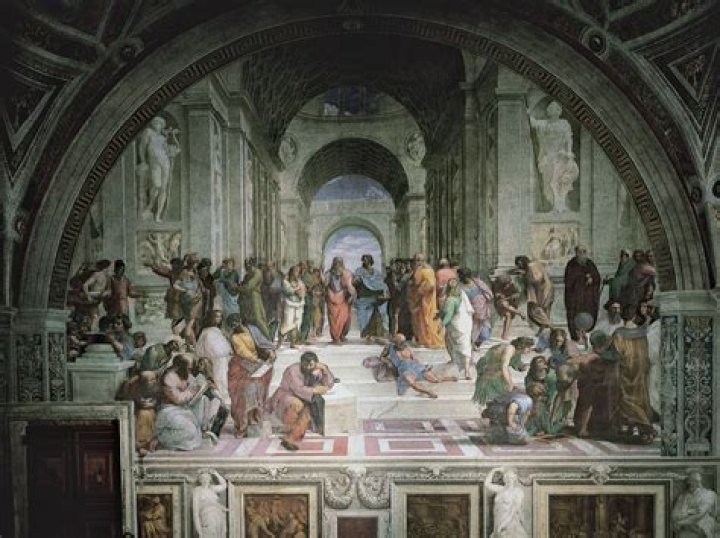
Renaissance classicism was an intellectual movement that sought to mimic the literature, rhetoric, art, and philosophy of the ancient world, specifically ancient Rome. … In fact, there were powerful classicist themes in medieval Europe’s scholarship, law, and art.
What is the significance of classicism?
Classicism asserts the importance of wholeness and unity; the work of art coheres without extraneous elements or open-ended conclusions. Both ancient Greek and ancient Roman writers stressed restraint and restricted scope, reason reflected in theme and structure, and a unity of purpose and design.
What is the influence of classicism?
Classicism, as an artistic influence, typically presents its classic ideals in art, literature, architecture, and music. Study of Greek and Latin and the arts of antiquity also became prime components of education for many centuries.
How did classical ideas influence the Renaissance?
Briefly describe two ways that classical ideas influenced Renaissance architecture. Renaissance buildings were modeled on ancient ruins. They had Greek- and Roman-inspired features such as arches, columns, and domed roofs. … The arches were supported by hoops of iron, wood, and brick.What does classicism in Renaissance drama mean?
In its purest form, classicism is an aesthetic attitude dependent on principles based in the culture, art and literature of ancient Greece and Rome, with the emphasis on form, simplicity, proportion, clarity of structure, perfection, restrained emotion, as well as explicit appeal to the intellect.
What is the classicism movement?
CLASSICISM (Literary Movement) 18th Century. Movement of artists and writers derived from the forms and principles of ancient Greece and Rome. It was a political and philosophical movement away from overt religion and toward reason and science.
What does classicism mean in literature?
English Language Learners Definition of classicism : the ideas and styles that are common in the literature, art, and architecture of ancient Greece and Rome. : a traditional style of art, literature, music, architecture, etc., that is usually graceful and simple with parts that are organized in a pleasing way.
What is an example of classicism?
What is Classicism? … Thus, for instance, any architecture, painting or sculpture produced during the Middle Ages or later, which was inspired by the art of Ancient Greece or Ancient Rome, is an example of classicism (or may be seen as classicist).How this science and technology change during the Renaissance?
Both the microscope and the telescope were invented during the Renaissance. This was due to improvements in making lenses. These improved lenses also helped with making eyeglasses, which would be needed with the invention of the printing press and more people reading.
What are the 5 components of Renaissance classicism?- A positive willingness to learn and explore. …
- Faith in the nobility of man- Humanism. …
- The discovery and mastery of linear perspective. …
- Rebirth of Naturalism. …
- Secularism. …
- 8 Great Artworks By Jacques Villon. …
- 10 Famous Paul Signac Paintings.
In what century did classicism originated?
The terms classic or classical came into use in the seventeenth century to describe the arts and culture of the ancient civilisations of Greece and Rome. The following of the principles of these ancient civilisations in art, architecture and literature is referred to as classicism.
What is classicism in classical poetry?
Classicism is a an aesthetic attitude deriving from the arts of ancient Greece and Rome, specifically an emphasis on simplicity, proportion, and restrained emotion.
When was classicism created?
Classicism originated and developed in the 17th century in France, in the heyday of absolute monarchy, and it subsequently spread to Spain, Germany, England, the Netherlands, USA and Russia, emerging in the process of Europeanization during the reign of Catherine II, who made everything French in vogue.
How did secularism affect the Renaissance?
Secularism was part of the renaissance because it exhibited itself in the development of humanism, when people began to show more interest in human cultural achievements and the possibilities of their fulfillment in this world. … In the renaissance, the church lost a lot of its power and there was more individualism.
How did the Renaissance change religion and spiritual matters?
During the Renaissance, people increasingly began to see the world from a human-centered perspective. This had a powerful impact upon religion. Increasingly, people were paying more attention to this life rather than the afterlife. Eventually, humanism brought about a spirit of skepticism.
What is the difference between romanticism and classicism?
Romanticism only follows the unity of action, but does not follow the unities of time, place. Classicism uses strict, rigid and logical diction and theme. … Classicism was based on the idea that nature and human nature could be understood by reason and thought.
What is Classicism in Literature Slideshare?
the term refers to the admiration and imitation of Greek and Roman literature, art, and architecture. refers to the styles, rules, conventions and modes of the classical authors, and their influence on the works of later authors.
What is classicism in sociology?
Classicist criminology is an approach which looks at the idea of rational action and free will. This approach was developed in the eighteenth century and early nineteenth century whereby they intended to produce a criminal justice system that was clear and legitimate and was based on everyone being equal.
What are the primary characteristics of classicism in music?
an emphasis on elegance and balance. short well-balanced melodies and clear-cut question and answer phrases. mainly homophonic textures (melody plus accompaniment) but with some use of counterpoint (where two or more melodic lines are combined)
How did the instrumental music develop in the classical period?
The fortepiano and then the pianoforte replaced the harpsichord, enabling more dynamic contrast and more sustained melodies. Over the Classical period, keyboard instruments became richer, more sonorous and more powerful. The orchestra increased in size and range, and became more standardised.
When can we call a work of art classical?
Classical is the term generally used to refer to the style of the ancient Greek and Roman periods. However, classical art has been revived over the years in the form of Renaissance art, baroque style and neoclassicism. Yet, as all variations follow the principles of classical style, they remain examples of classicism.
What are the important events during the classical era?
- 1754 – 1763 French and Indian war was waged.
- 1760 – Industrial revolution began.
- 1775 – 1783 American revolution.
- 1776 – American declaration of independents.
- 1789 – George Washington was elected first President.
- 1791 – Bill Of Rights.
- 1799 – Great Revival in America.
- 1803 – Louisiana Purchase.
What are the important technologies during the Renaissance?
- Printing Press.
- Woodblock printing.
- Pendulum.
- Eyeglasses.
- Telescope.
- Microscope.
- Barometer.
- Musket.
How did technology contribute to the spread of Renaissance ideas?
At its core, the Renaissance was about new ideas (such as humanism) overthrowing old views and customs (such as religious beliefs and practises and feudal traditions). Therefore, the invention of the printing press allowed these new ideas to spread and further enhance the overall Renaissance.
What technology came from the Renaissance?
Three inventions in particular — the printing press, firearms, and the nautical compass — were indeed seen as evidence that the Moderns could not only compete with the Ancients, but had surpassed them, for these three inventions allowed modern people to communicate, exercise power, and finally travel at distances …
What is difference between neoclassicism and Classicism?
In the context of the tradition, Classicism refers either to the art produced in antiquity or to later art inspired by that of antiquity, while Neoclassicism always refers to the art produced later but inspired by antiquity.
What is Classicism in architecture?
This is architecture that looks back to a Classical past. … This is architecture that looks back to a Classical past. The roots of Classicism are in ancient Greek and Roman architecture – in the temple architecture of ancient Greece and in the religious, military and civic architecture of the Roman Empire.
What do you understand by Renaissance discuss its main characteristics?
Characteristics of the Renaissance include a renewed interest in classical antiquity; a rise in humanist philosophy (a belief in self, human worth, and individual dignity); and radical changes in ideas about religion, politics, and science.
What did Francesco Petrarch believe?
Though he felt that he lived “amid varied and confusing storms,” Petrarch believed that humanity could once more reach the heights of past accomplishments. The doctrine he espoused became known as humanism, and formed a bridge from the Middle Ages to the Renaissance.
How did the Renaissance shape European art thought and religion?
How did the Renaissance shape European art, thought, and religion? … Renaissance people remained religious, but they no longer accepted religious authority unquestioningly, Instead, they used their expanding knowledge in other fields to shape their own religious thinking.
What led to the rise of classicism?
The new conventions of these revival movements taught that the music of earlier times deserved special attention and that it should be listened to in silence and respect. As a result of these early efforts at revival, the notion of “classical music” as a serious art form was created.