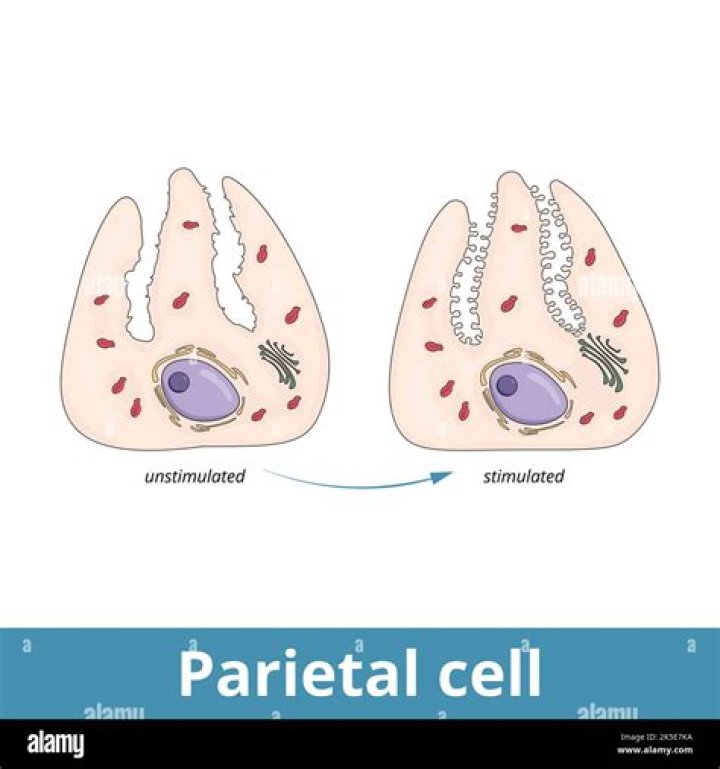
When parietal cells are stimulated they secrete

Daniel Johnston
Published Jun 28, 2026
When stimulated, parietal cells secrete HCl at a concentration of roughly 160 mM (equivalent to a pH of 0.8). The acid is secreted into large cannaliculi, deep invaginations of the plasma membrane which are continuous with the lumen of the stomach.
What stimulates parietal cells to secrete HCl?
Histamine stimulates the parietal cells to secrete HCl. The gastrin-ECL cell pathway has been investigated extensively in situ (gastric submucosal microdialysis), in vitro (isolated ECL cells) and in vivo (intact animals).
What stimulates ECL cells to secrete histamine?
ECL cells synthesize and secrete histamine in response to stimulation by the hormones gastrin and pituitary adenylyl cyclase-activating peptide. Gastrin itself is secreted by cells in the epithelium of the stomach, but travels to ECL cells via the blood.
What do parietal cells secrete?
Parietal cells are responsible for gastric acid secretion, which aids in the digestion of food, absorption of minerals, and control of harmful bacteria.What stimulates the secretion of gastrin?
Gastrin release is also stimulated by the stretching of the stomach walls during a meal, the presence of certain foods (particularly proteins) within the stomach cavity and an increase in the pH levels of the stomach (i.e. the stomach becoming less acidic).
Do parietal cells secrete gastrin?
They secrete gastrin when stimulated directly by vagal efferent neurons as well as GRP neurons. … Parietal cells, found in the pits of the gastric fundus and cardia, secrete hydrochloric acid into the lumen of the stomach via K/H ATPase on the apical (luminal) membrane.
Do parietal cells secrete intrinsic factor?
Intrinsic factor is produced by the gastric parietal cell. Its secretion is stimulated via all pathways known to stimulate gastric acid secretion: histamine, gastrin, and acetylcholine.
What cells secrete histamine in GI?
Enterochromaffin-like cells or ECL cells are a type of neuroendocrine cell found in the gastric glands of the gastric mucosa beneath the epithelium, in particular in the vicinity of parietal cells, that aid in the production of gastric acid via the release of histamine.What happens during the cephalic phase of gastric secretion?
The cephalic phase of digestion is the stage in which the stomach responds to the mere sight, smell, taste, or thought of food. About 20% of total acid secretion occurs before food enters the stomach.
What stimulates Enterochromaffin?Gastrin Stimulates Enterochromaffin-Like Cell DNA Synthesis Unlike parietal cells, ECL cells are capable of proliferation and are stimulated to do so by gastrin.
Article first time published onWhich cells produce histamine in the monogastric stomach?
For a long time, the mast cell was the only recognized histamine-producing cell in the oxyntic mucosa and, in the mid-1980s, the ECL cell was recognized as the cell producing histamine, taking part in the regulation of gastric acid secretion.
What stimulates CCK release?
CCK is produced by discrete enteroendocrine cells of the upper small intestine, also called I cells, and is released upon ingestion of a meal (41). The major nutrients that stimulate CCK release are fats and ingested proteins.
What triggers release of gastrin?
When food enters the stomach, G cells trigger the release of gastrin in the blood. As blood levels of gastrin rise, the stomach releases acid (gastric acid) that helps break down and digest food. When enough gastric acid has been produced by the stomach, gastrin levels in the blood drop.
What stimulates the release of gastrin quizlet?
Gastrin: The vagus nerve stimulates gastrin secretion.
Do parietal cells secrete intrinsic factor and quizlet?
Parietal cells secrete intrinsic factor and it functions as a carrier molecule which binds vitamin B12 so that it can be absorbed by the intestine. … Chief cells, also known as Peptic Cells, are found in the glandular region of gastric glands which is found in the lamina propria of mucosa layer.
What secretes intrinsic factors quizlet?
Intrinsic Factor – Secreted from Parietal Cells (B12 Abs.) Pepsinogen – Secreted from Chief Cells in body of stomach (Digest Prot.)
When parietal cells secrete protons into the stomach What would you predict would happen to the pH of the blood?
Pepsin Pearls Parietal cells within the stomach lining secrete hydrochloric acid that lowers the pH of the stomach. A low pH (1.5 to 2) activates pepsin. Acetylcholine, gastrin, and histamine stimulate the proton pump in parietal cells to release hydrogen ions and decrease pH.
Where is CCK secreted?
CCK cells are concentrated in the proximal small intestine, and hormone is secreted into the blood upon the ingestion of food. The physiological actions of CCK include stimulation of pancreatic secretion and gallbladder contraction, regulation of gastric emptying, and induction of satiety.
What cell releases somatostatin?
In the pancreas, somatostatin is produced by the delta cells of the islets of Langerhans, where it serves to block the secretion of both insulin and glucagon from adjacent cells. Insulin, glucagon, and somatostatin act in concert to control the flow of nutrients into and out of the circulation.
What stimulates the gastric and cephalic phase?
The cephalic phase of gastric secretion is initiated by the sight, smell, thought or taste of food. Neurological signals originate from the cerebral cortex and in the appetite centers of the amygdala and hypothalamus. This enhanced secretory activity is a conditioned reflex.
When fat enters the duodenum it stimulates release of ____?
However, today these two actions are recognized as belonging to one enzyme, now known solely as cholecystokinin. Cholecystokinin is secreted by cells of the upper small intestine. Its secretion is stimulated by the introduction of hydrochloric acid, amino acids, or fatty acids into the stomach or duodenum.
Which phase of gastric secretion is stimulated quizlet?
During the cephalic phase of gastric secretion, increased production of gastric juice occurs. the intestinal reflex inhibits gastric emptying.
What process is triggered by histamines?
Histamines Unleashed When they leave the mast cells, histamines boost blood flow in the area of your body the allergen affected. This causes inflammation, which lets other chemicals from your immune system step in to do repair work. Histamines then dock at special places called “receptors” in your body.
Which cells secrete histamine quizlet?
Step 1: Release of proinflammatory factors from mast cells and basophils (release histamine). Step 3: Recruitment of immune cells.
What happens when histamine is released?
Histamine is released at the mucosal surfaces as a result of exposure to foreign particles. This histamine release causes the capillaries to become more permeable to white blood cells, which move into the capillaries and proceed to target and attack foreign bodies in the affected tissue.
What is secreted by Enterochromaffin cells?
Enterochromaffin-like (ECL) cells are a population of cells that are found in the gastric pits of the stomach luminal epithelium and secrete histamine. In response to gastrin released by neighbouring G-cells, secreted histamine from ECL cells acts on parietal cells to stimulate the release of gastric acid.
Where do parietal cells go?
Parietal cellA parietal cell.Control of stomach acidDetailsLocationStomach
What is the function of histamine in the stomach?
Histamine plays an essential role in the regulation of acid secretion by oxyntic cells in the stomach. The source of this histamine varies according to the species but in humans the amine is located largely in mast cells in the gastric mucosa.
How does histamine stimulate parietal cells?
When histamine binds to H2-type receptors on the parietal cell, the enzyme adenylyl cyclase is activated, leading to an increase in intracellular cyclic adenosine monophosphate (cAMP) concentrations.
Why does histamine stimulate parietal cells?
Additionally, pharmacologic antagonists of each of these molecules can block acid secretion. Histamine’s effect on the parietal cell is to activate adenylate cyclase, leading to elevation of intracellular cyclic AMP concentrations and activation of protein kinase A (PKA).
Do parietal cells produce bicarbonate?
Parietal cells contain an extensive secretory network (called canaliculi) from which the “hydrochloric acid” is secreted into the lumen of the stomach. … The parietal cell releases bicarbonate into the bloodstream in the process, which causes a temporary rise of pH in the blood, known as an alkaline tide.