What happens when you mix steel wool and vinegar

Mia Lopez
Published Jun 25, 2026
When you soak the steel wool in vinegar it removes the protective coating of the steel wool and allows the iron in the steel to rust. Rusting (or oxidation) is a chemical reaction between iron and oxygen, this chemical reaction creates heat energy which increases the temperature inside the beaker.
Does steel wool dissolve in vinegar?
Let the vinegar dissolve the steel wool for at least two to three days. … The mixture will get darker the longer you let it sit, but you can always dilute that dark concentrate with more vinegar later on.
What new material was formed after you dip the steel wool in the vinegar?
If the steel wool is too wet, the reaction will be less exothermic and yield less rust. This is because the acetic acid from the vinegar will react with the iron from the steel wool to form iron acetate and hydrogen gas.
How long does it take for steel wool to rust in vinegar?
Exothermic chemical reactions produce heat. In this reaction, vinegar is used to remove the protective coating from steel wool, allowing it to rust. When the iron combines with oxygen, heat is released. This takes about 15 minutes.Does vinegar react with steel?
Vinegar helps to dissolve iron oxide (red-brown marks) that form on stainless steel, while aluminum reduces iron oxide to iron and aluminum oxide.
Does vinegar destroy wood?
hardwood floors, wood furniture, and other word surfaces – due to its acidic nature, vinegar can damage hardwood floor finishes, causing them to look dingy. Use either a cleaner specifically made for hardwood floors or a mix of soap and water. … Thus, vinegar should never be used to clean stone.
How does steel wool and vinegar age wood?
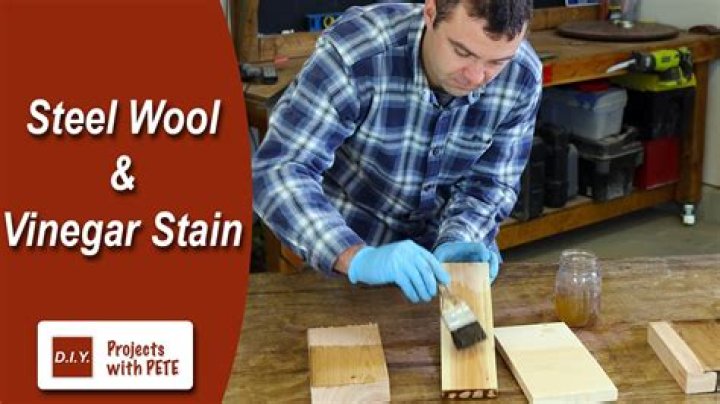
The easiest way to age wood is with things you probably already have in your kitchen. Pour vinegar into the glass jar, filling it about halfway. Shred the steel wool and add it to the jar. Let the steel wool and vinegar sit in the jar uncovered for at least 24 hours.
How do you oxidize wood with vinegar and steel wool?
Soak some steel wool in white vinegar for a few hours or a few days – the longer it steeps, the darker the aged effect will be. Fill the jar with the steel wool and vinegar, the measurements don’t have to be precise. Use 0000 steel wool (shown here) so it breaks down even faster in the vinegar.What chemicals react with vinegar?
When the two substances are mixed together, hydrogen ions in the vinegar react with the sodium and bicarbonate ions in the baking soda. This initial reaction results in two new chemicals: carbonic acid and sodium acetate. A decomposition reaction is the second reaction that occurs.
What happens when vinegar and baking soda?When baking soda is mixed with vinegar, something new is formed. The mixture quickly foams up with carbon dioxide gas. … Sodium bicarbonate and acetic acid reacts to carbon dioxide, water and sodium acetate.
Article first time published onWhat will happen if iron nail is in vinegar?
Vinegar contains acetic acid. In contact with iron ferrous acetate is formed. At room temperature in a dilute solution of acetic acid (vinegar) the reaction proceeds very slowly. So for the most part the nail will not be affected, but some of the nail’s iron will form ferrous acetate.
What happens to an iron nail in vinegar after 1 day?
Originally Answered: What will happen when you soak a nail in vinegar for one day? Any acid will degrade the nails (and your skin!) Also the acid will slowly be absorbed by the nail and will continue to work even when the nail is removed from the acid (or the acid from the nail).
What kind of metal reacts with vinegar?
Vinegar. Vinegar speeds up rusting because it contains a dilute form of acetic acid; positive hydrogen ions in the acid remove electrons from iron, ionizing it and making it susceptible to rust.
What should you not use vinegar on?
- Granite and marble countertops. “The acid in vinegar can etch natural stone,” says Forte. …
- Stone floor tiles. …
- Egg stains or spills. …
- Irons. …
- Hardwood floors. …
- Truly stubborn stains.
How do I get the red out of my Douglas fir?
- First of all, wipe the surface with mineral spirit.
- Next, apply the oil-based paint to the wood. Oil-based paint mineral spirit should apply in equal amounts for better results.
- Apply the oil-based paint with 2-3 coats.
- Let it dry.
Does vinegar darken wood?
You can age and darken new wood very simply using just white vinegar and 0000 steel wool. The longer you let the solution sit the darker the wood will get so you can easily reach any coloration with multiple coats using this technique.
What does white vinegar do to wood?
White vinegar suits wood well. Not only does it remove dirt and dust, but it also helps polish the wood. It provides a shimmering effect, giving the wood more life. When there are wine, milk, and other liquid stains on wood, you can apply the vinegar and allow it to soak for a few minutes.
Can I use vinegar on stainless steel?
Stainless steel is no exception. The vinegar helps break up any residual grease left from fingertips or cooking on the surface. Put it in a spray bottle and wipe clean.
What can vinegar do?
You can use vinegar to clean your microwave; remove grease; remove mold, mildew, and mineral deposits; clean carpeting; as a furniture polish; remove stains on clothing; remove crayon marks; clean stainless steel; clean window blinds; remove copper and brass tarnish; clean glass; and use it as a CD cleaner.
Is distilled vinegar the same as cleaning vinegar?
The only difference between cleaning vinegar and distilled white vinegar is the level of acidity. … Cleaning vinegar contains around six percent acetic acid. That doesn’t sound like much of a difference, but cleaning vinegar is 20 percent stronger than white distilled vinegar for tackling cleaning chores.
How does salt react to vinegar?
The combination of salt and vinegar creates sodium acetate and hydrogen chloride. This chemical reaction will take an old penny and shine it like new. … Once the salt is melted and absorbed into the vinegar, dip the penny in the solution for 60 seconds.
Does sugar react with vinegar?
Use the dropper to add two to three drops of vinegar to each powder. … The mystery powder is the powdered sugar. When the vinegar is dropped on the powdered sugar, a reaction does not occur. Vinegar and baking soda create a chemical reaction, and it will fizz and bubble as carbon dioxide gas is formed.
What happens when vinegar and water mix?
This happens because vinegar consists of water and acetic acid. The acetic acid forms strong bonds with water molecules. These bonds slow the movement of the molecules in the solution faster than molecules in pure water, causing the solution to freeze more quickly.
Does vinegar and steel wool work on Pine?
Pine wood lacks tannin content, but tannin occurs in tea, and the steel wool and vinegar will react with the tea stain and darken the wood. … Use your judgement – on the wood that looks very light in color, you may want to use a little extra tea. Let the wood sit until completely dry.
What combination of vinegar and baking soda creates the biggest eruption?
Adding vinegar to baking soda gives you an immediate reaction. Adding baking soda to vinegar, the reaction is delayed, but then fizzes the same amount. More vinegar is better. A 12 to 1 ratio of vinegar to baking soda caused a fizzing explosion!
What is formed when milk was added to vinegar?
The vinegar and milk react to form curds (a solid) and whey (a liquid).
Why does baking soda and vinegar explode?
When the baking soda and vinegar mix, they create a chemical reaction that produces gas (carbon dioxide in this case). Gas needs more room, which is why you see the bag start to expand and eventually pop!
How does vinegar react with rust?
Vinegar contains CH3COOH (acetic acid) . This reacts with rust FeOOH. The chemical reaction is: 3CH3COOH+FeOOH⟶Fe(CH3COO)3+2H2O. The acid forms a water-insoluble salt with the iron oxide, which then probably just crumbles from the rust layer.
Why does vinegar make nails rust?
Since the salts it produces dissolve in the vinegar, you often don’t easily see them. On the other hand, water is not so acidic, so it corrodes, or rusts, the metal to form an oxide or hydroxide; with iron, this usually appears as a brown mess. … Then put one of them into water and the other into vinegar.
What happens to an iron nail in vinegar after 3 day?
The nails in water should both form rust within three weeks, and the vinegar should rust a nail approximately one week later. The soda and juices should not cause any rust to form on the nail.
Is vinegar corrosive to metal?
Small Appliances. The plastic and glass surfaces on most small kitchen appliances, such as blenders, coffee makers, and toasters, are safe to clean with vinegar, but you want to avoid any rubber parts or metal that vinegar can corrode. This includes stainless steel.