What can I use for embroidery stabilizer

David Jones
Published Jun 28, 2026
The stabilizer is pretty expensive so I didn’t buy any, instead I use dryer sheets. I save them after drying my clothes, iron them and then reuse them. If you need a stiffer stabilizer, use it before it has been dried with your clothes. It works great and makes your craft smell good!
Can you use a dryer sheet as a stabilizer?
The stabilizer is pretty expensive so I didn’t buy any, instead I use dryer sheets. I save them after drying my clothes, iron them and then reuse them. If you need a stiffer stabilizer, use it before it has been dried with your clothes. It works great and makes your craft smell good!
Can I use felt as a stabilizer?
Stabilizers for Felt Because felt is a fairly stiff material, you might feel that there is no need for stabilizers. For best results we do recommend using a middle-weight tear-away stabilizer for a regular embroidery design as felt is strong enough to withstand the tearing motions.
Can you do embroidery without stabilizer?
Without a stabilizer sheet, embroidering on knit fabrics would be extremely difficult. Knit fabric by nature is flexible. When you stretch it on a hoop the fabric is distorted, resulting in uneven stitching.Can I use interfacing instead of stabilizer?
The biggest difference between stabilizer and interfacing is that stabilizer provides more structure and is usually removed after sewing, whereas interfacing becomes part of the project. … Interfacing is meant to be permanently added to the fabric. The stabilizer is meant to be removed after stitching.
What is fabric stabilizer?
Stabilizer supports the fabric while maintaining weave and grain. It also provides body, gives hand to the fabric, and prevents fraying. Interfacing only provides body, shape, and weight to a specific area. Typically stabilizer is applied to the WRONG side of fabric.
Can you use freezer paper as stabilizer for machine embroidery?
Freezer paper is an excellent stabilizer. I use it most often to cut out felt pieces. I print the pattern pieces directly onto the freezer paper. (You can trace if you’re not as lazy as I am.)
How do you stabilize a shirt for embroidery?
Use cut-away stabilizer, preferably a fusible no-show mesh. They keep knits from stretching out of shape and keeps embroidery where it belongs. Turn the shirt inside out and fuse a piece of no-show mesh significantly larger than the hoop size. Turn right side out, find your center point and hoop the stabilized shirt.What's the difference between interfacing and stabilizer?
Stabilizers provide structure for projects like tote bags and crafts, whereas interfacing is generally used to provide more body in apparel projects like shirt collars and facings. The heavier the weight, the more body or structure it provides. Interfacing and stabilizers are available in sew-in and fusible varieties.
Can you hand embroider on flannel?I love flannel’s softness, and am amazed that it can be so soft and sturdy enough to support embroidery beautifully. Designs of varying complexity work well on flannel — from lighter designs such as Redwork to more stitch-filled designs such as the Kaleidoscope Autumn Abundance Leaf in the photo on the left.
Article first time published onWhat is embroidery stabilizer made of?
Embroidery stabilizer is a piece of material (i.e. paper, fiber, or water soluble material) that is used on the back of or on top of fabric to make it more durable when embroidered or sewn on. What is this? There are several different types: cutaway, tearaway, fusible, and water-soluble.
What is fabric interfacing?
What is interfacing? Interfacing is a fabric which is used to make certain parts of a garment more stable. It is used as an additional layer which is applied to the inside of garments, such as collars, cuffs, waistbands and pockets, helping to add firmness, shape, structure, and support to the clothes.
What felt is best for embroidery?
FABRIC: Wool, polyester, and acrylic felt are all available. Choose what suits your taste and your project. As usual, thicker fabrics will be better able to hold thicker designs. DESIGN: With the proper stabilizer, most any designs can be stitched on felt – from redwork to heavy, detailed designs.
Can you use interfacing as stabilizer for embroidery?
Stabilizers support embroidery stitches but, sometimes, fabric needs a little bit of help too. Adding a layer of fusible interfacing to the back of fabric before embroidering can help prevent puckering, particularly with lighter cotton fabrics.
What stabilizer to use on cotton?
Needle75/11 or size 11 sewing or embroidery needleStabilizerA medium-weight cutaway stabilizer (2.5 ounces) is the best choice. Tear-away stabilizer can be used with very light and simple designs.Design ChoiceChoose designs with low to medium complexity.
What is fusible stabilizer?
It adds a thick layer to the fabric making it easier to hold a specific shape. Consider using multiple layers of fusible fleece to create an especially rigid shape. Fusible Web: Adhesive on both sides, this type of interfacing is used mostly for appliqué. It is also known as Stitch-Witchery or Heat ‘n Bond.
Can you sew through freezer paper?
Freezer Paper Piecing uses freezer paper as a pattern foundation. Unlike standard paper piecing, the paper is not sewn through.
What can I use instead of fusible fleece?
If you don’t have fusible fleece or other interfacing at hand, you could use any regular batting, a felt-like batting (cotton) is the best. The batting +backing add structure and body to the bag, still the bag will be flexible.
What is liquid fabric stabilizer?
Liquid stabilizers temporarily stiffen fabrics. You can apply one of these products to yardage, cut and construct your garment, then rinse the stabilizer away to restore the fabric’s original hand. While the technique may seem time-consuming, the ease of handling and beautiful results make the extra effort worthwhile.
How do I choose a stabilizer for my embroidery machine?
- Cut Away Backings provide the most stability and stay on the garment helping to keep it stable after being embroidered. …
- Tear Away Backings are removed, or torn away, from the fabric after embroidery. …
- Water Soluble Stabilizers dissolve when immersed in water.
What is midweight stabilizer used for?
40 Pellon® Stabilizer Midweight is a mid to heavyweight sew-in stabilizer for firm, crisp support. It is great for hat brims, tote bags, and needlecraft backings.
Do I really need interfacing?
Even if using a naturally crisp or heavy material, you will need interfacing in structural areas so that they are less limp than the rest of your garment. … Made out of only cloth, it would be like a pocket. It would sag and distort when you put things in it. Interfacing is what gives a purse the ability to hold a shape.
How do you make embroidery durable?
- Use High Quality Embroidery Floss. I recommend using DMC embroidery floss because it is colorfast. …
- Secure All Loose Threads. I know a lot of people don’t like to finish embroidery with knots but… …
- Add Some Embroidery Stabilizer to the Back to Protect Stitches.
What stabilizer is best for T-shirts?
Stitching tips for T-shirts:Needle75/11 or size 11 embroidery needle.StabilizerOne piece of medium-weight (2.5 ounce) cutaway stabilizer is the best choice. Tear-away stabilizer may be used with the lightest of designs, such as toile or vintage. Topping is not necessary.
What kind of stabilizer should I use for polyester?
Because polyester fabrics are less stable than most fabrics, always use cutaway stabilizer for the best results. In some instances where you don’t want the backing showing, consider tearaway.
Can you embroider on fleece fabric?
Fleece is warm and cozy, and is a great fabric to use for sewing and embroidery projects because it comes in a variety of colors, weights, and thicknesses.
How many layers of stabilizer do I need for embroidery?
Tips & Tricks: If you are stitching out lace, or any free standing embroidery-only design onto Wash Away stabilizer, we suggest that you double up and use two layers. If it is very stitch intensive, consider 3 layers.
What is wash away stabilizer?
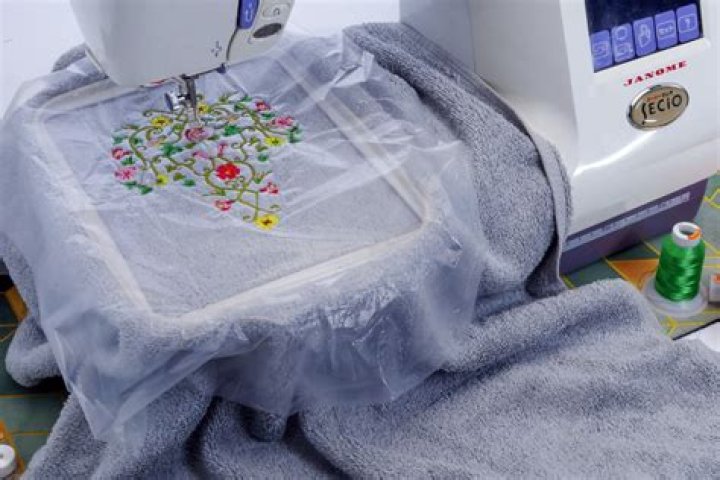
Wash-away stabilizers– Wash-away stabilizers are designed to dissolve when wet and come in several forms: plastic-like film and soluble paper, both of which can be hooped with the fabric, and liquids that stiffen when brushed or sprayed on the fabric and allowed to dry.